
Storm Debris & Emergency Dumpster Rental in Tyler, TX
Same-day delivery after hail, wind, flood, and tornado damage across Tyler and Smith County. Flat-rate pricing — no emergency surcharges. Real person answers seven days a week.
Storm & Weather Events in Tyler, TX — What You’re Dealing With
Tyler and Smith County sit in East Texas’s severe weather corridor. NWS Shreveport covers this region and issues watches and warnings for the events that hit here regularly. Understanding your storm type tells you which container size and which loading approach applies.
The most consistent threat. Tyler and Smith County experience multiple significant hail events annually, concentrated between late February and June. A single storm tracking across South Tyler, Whitehouse, or the Loop 49 corridor can damage hundreds of roofs simultaneously — driving a surge in roofing containers across multiple ZIP codes at once. Call early. Same-day availability fills fast after a significant event.
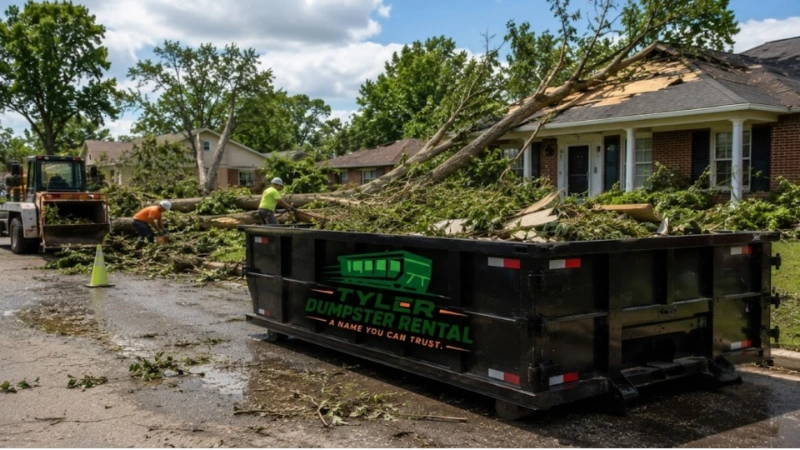
Straight-line winds, severe thunderstorm gusts, and the occasional tornado knock down trees, scatter roofing materials, destroy fencing, and damage structures across Tyler and Smith County. A significant wind event can drop mature East Texas trees that have stood for decades — root balls, large trunk sections, and extensive branch debris that no curbside service handles.
Low-lying areas and properties near creek corridors throughout Tyler and Smith County are flood-prone. Bullard, Flint, and Chandler area properties near Lake Palestine are particularly vulnerable. Flood damage generates a specific debris category — waterlogged drywall, flooring, cabinetry, and household contents — that must come out quickly. Mold begins developing within 24–48 hours in East Texas’s warm, humid climate.
East Texas ice storms — less frequent but impactful — snap tree limbs and bring down branches stressed by years of growth. Ice storm debris is typically lighter by weight than summer storm debris, but can be voluminous across larger Tyler properties with mature trees. A 10 or 15-yard handles most single-property ice storm cleanups.
How We Handle Emergency Requests in Tyler & Smith County
Storm events create a specific logistics challenge. When a hailstorm crosses South Tyler or Whitehouse, we’re not getting one call — we’re getting dozens simultaneously from homeowners and roofing contractors across multiple ZIP codes. Here’s how we manage that honestly.
For morning calls before 10 AM, we target same-day delivery across Tyler and most of Smith County. On storm-heavy days we work through calls in the order they come in. The earlier you call, the better the same-day window. If same-day isn’t available, we give you the earliest realistic window — not an optimistic one we can’t keep.
Storms don’t happen on schedule. We operate Monday through Friday 7 AM–7 PM, Saturday 7 AM–5 PM, and Sunday 8 AM–4 PM. When a storm hits Tyler on a Friday evening, we’re available Saturday morning. Call as soon as you’re ready to act.
The same flat-rate pricing applies year-round — including during storm season and after major weather events. A 20-yard is $425 whether you’re ordering it in January for a renovation or the morning after a hailstorm in April. No premium for urgency, no storm-season pricing, no weekend fees.
If you’re a roofing contractor working multiple storm-damage properties across Tyler simultaneously, call us to coordinate. We can schedule sequential deliveries across job sites, discuss container exchange logistics, and work around your schedule. We understand the insurance timeline and storm-recovery scheduling pressures involved.
We won’t promise same-day when we can’t deliver it. What we will do is give you an accurate window, get you scheduled as early as possible, and handle the logistics so you can focus on the cleanup. Call (903) 857-7771 — we answer seven days a week.
Storm Debris Dumpster Rental Pricing in Tyler, TX
Same pricing for storm and emergency rentals as for any other project. No seasonal surcharges, no storm premiums, no weekend fees.
| Container | Price | Weight Included | Storm Use Case |
|---|---|---|---|
| 10-Yard | $299 | 1 ton | Single-lot yard debris — branches, brush, fence sections from one storm event |
| 15-Yard | $350 | 1.5 tons | Large tree removal, significant fence replacement, combined yard and minor structural debris |
| 20-Yard | $425 | 2 tons | Standard roofing tearoff (single layer), combined roof and yard debris, flood remediation 1–2 rooms |
| 30-Yard | $550 | 3 tons | Multi-layer roofing tearoff, full home flood remediation, large roofing plus siding combined |
Which Size for Your Storm Situation?
Storm debris presents a specific sizing challenge — it often looks lighter than it is. Here’s how to think about it for the most common Tyler scenarios.
Single-lot yard cleanup after a moderate storm: 10-yard. Large tree removal with root ball and multiple large limbs: 15-yard (root balls are heavier than they look — mostly dense soil). Multiple trees or a large property: 15-yard minimum.
Single layer under 1,500 sq ft: 20-yard. Single layer 1,500–2,500 sq ft: 20 or 30-yard. Two-layer tearoff any size: 30-yard minimum. Roofing plus siding combined: 30-yard. Asphalt shingles weigh 250–400 lbs per square — weight hits before the container looks full.
One room: 10 or 15-yard. Two to three rooms: 15 or 20-yard. Full single-story home flood remediation: 20 or 30-yard. Waterlogged materials are significantly heavier than their dry equivalents — saturated drywall and flooring add weight fast. Load weight-aware.
Single-property ice storm cleanup: 10-yard handles most. Large properties with multiple affected mature trees sometimes need a 15. Ice storm wood is drier and lighter than summer storm debris — volume is the constraint.
Flood Damage Debris Removal — Step by Step
Flood damage in a Tyler home requires a specific sequence of actions. Debris removal is critical — and it intersects with your insurance claim, your contractor’s work, and the mold clock. Here’s the right order.
Before pulling drywall, ripping up flooring, or moving damaged items, photograph and video everything. Your insurance adjuster needs documentation of damage in place. The urgency of a flooded home can push people to start removing before documentation is complete. Take the pictures first.
Mold begins developing within 24–48 hours in East Texas’s warm, humid climate — faster in summer months. The container should be on your driveway before demo starts. Call us as soon as documentation is done.
Work from the most saturated areas outward. Drywall, insulation, and flooring in the wettest areas should come out first. Your remediation contractor will direct the sequence if you’re working with one.
Waterlogged drywall, saturated flooring, and soaked furniture all weigh significantly more than their dry equivalents. Spread heavy saturated debris throughout the container rather than concentrating it. If you’re uncertain about weight, call us before pickup.
Call us for pickup as soon as debris is fully loaded. Don’t wait for the remediation contractor to finish all their work. We pick up within 24–48 hours. If you’re working with an insurance claim, keep your rental receipt — we can provide documentation for your claim file.
What Can You Put in a Storm Debris Dumpster?
Most storm and flood debris is accepted. The prohibited materials list doesn’t change during an emergency — but if you have a question about a specific material, call before loading. Two-minute conversation, no complications later.
Very large trunk sections from storm-downed trees may be better handled by a tree service that chips or hauls separately. If your downed tree has significant trunk diameter, mention it when you call — we’ll advise on whether the container is the right tool or whether a tree service handles it more efficiently.
You can mix roofing debris and yard or structural debris in the same container as long as the combined weight stays within the included limit. Shingles are dense — mixing them with yard debris pushes toward weight limits faster than yard debris alone. Tell us what’s going in and we’ll account for the combined weight before delivery.
Where We Deliver After a Storm — Tyler, TX & Smith County
We deliver across all Tyler ZIP codes and throughout Smith County seven days a week. Same-day available for morning orders — call early after any storm event.
Storm & Emergency Dumpster FAQs — Tyler, TX
Tell us your address and what the storm did. We’ll confirm the right container size, flat-rate price, and the earliest available delivery window. No emergency surcharges. No runaround.